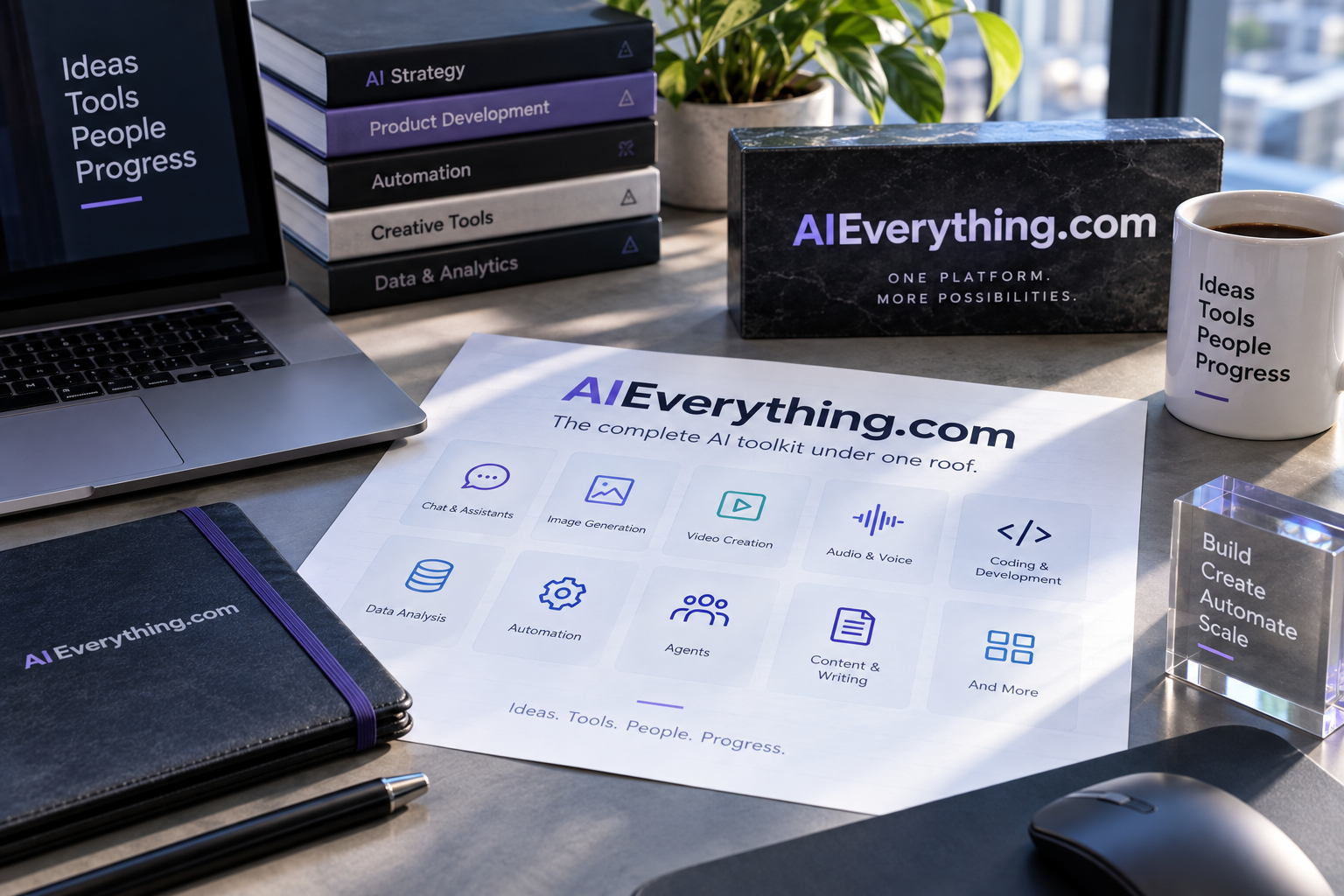
AIEverything.com could give a collection of AI products one public home. The opportunity is a suite that feels coherent to a customer who needs to complete several related tasks. A shared account, familiar controls and sensible product names would do more to establish that coherence than a long list of integrations. The broad name offers room for expansion, while each product underneath it can make a narrow, testable promise.
The following concept is illustrative. It describes a possible business a buyer could build, rather than a product roster available with the domain. A useful starting audience would be small teams that prepare a lot of customer-facing material but have limited time for moving drafts between separate tools. Their common problem is the handoff from source information to a reviewed piece of work.
Begin with one connected workflow
Consider a suite for turning approved product information into a launch brief, a support draft and an internal reference note. Each output has a different audience, but all three depend on the same source material. The first product could help a team collect that material and produce a brief for a person to review. The next product would only earn a place if it reused that foundation in a useful way.
This creates a concrete first offer: a workspace for preparing and reviewing launch content. It gives a buyer something easier to evaluate than “all the AI tools your team needs.” The landing page could show the original notes, the resulting brief and the points that still require approval. A visitor could understand the workflow before creating an account.
Keep the smallest version complete. A working export, a clear revision history and an understandable error message matter more than another tab marked “coming soon.” If someone cannot finish the first task, the breadth of the brand becomes a distraction. The product roadmap should grow from observed requests, with a stated reason for adding each new capability.
Make the suite behave like a suite
Shared design alone will not solve a fragmented experience. Decide which information carries between products and which stays separate. A project title might be shared across the workspace, while a private draft should remain visible only to its author until deliberately shared. These decisions need to be reflected in the interface, permissions and help material.
A simple product map can help. List the input, output, owner and destination for each tool. If two tools accept the same material and produce almost the same result, combine them or explain the difference. If a tool has no connection to the rest of the workflow, it may belong outside the suite. A broad name allows adjacent products; it does not require unrelated ones.
For the operator, execution would require more than model access. Someone needs to own account management, billing explanations, support, evaluation and changes to connected services. The NIST AI Risk Management Framework provides a voluntary reference for thinking about AI risks. It can inform planning without serving as a certification or proof that a particular product is safe.
Show one job in public
A credible distribution path would be a series of task demonstrations aimed at the first audience. For example, a short guide could show how a product marketer turns a messy set of release notes into a reviewable launch brief. The demonstration should include an ordinary complication, such as conflicting dates, so the audience can see how the product handles uncertainty.
Invite readers to try the same task using a sample document. A useful sample reduces the need to upload company information just to understand the offer. It also gives support a shared starting point when someone gets stuck. Keep demonstrations tied to actual behavior in the current version, and revise them when the workflow changes.
Partnerships with educators or specialist communities could follow once there is a reliable task to teach. The content should be useful even to someone who does not buy. A checklist for preparing source documents, for instance, has independent value and introduces the exact problem the suite addresses. That is a better fit for the concept than publishing a directory of unrelated tools simply to fill pages.
Set boundaries a customer can repeat
The word “Everything” creates an expansive impression. A descriptive line below the brand should immediately narrow that impression: “AI workspaces for preparing product launches” is one possible direction. The promise belongs to the actual offer, and the operator should change that sentence as the offer changes. A customer should never have to infer capability from the domain alone.
Write the boundary in the buying journey as well. State which formats are accepted, which outputs need review, and which connections are supported. If a feature is experimental, distinguish it from the workflow customers depend on. A strong cancellation and export experience also deserves attention; customers need a clear way to leave with the work they created.
Before deciding on this direction, sketch three product cards and draw the handoffs between them. Name the first customer, identify the first completed task, and remove any card that does not help that person. Compare the result with the internal platform concept, where governance and access would drive a different set of priorities.
Bring a product thesis to the inquiry
AIEverything.com would fit a team that intends to build an enduring umbrella around several related products. The domain acquisition is the starting asset; software, integrations and a customer base would need to be developed separately. Site asset inclusion can be discussed if it matters to the planned launch.
To explore the name, send an inquiry with the intended audience and the first workflow. Choose Buy for an acquisition discussion and select GoDaddy or Escrow.com as the preferred purchase platform. A partnership proposal should explain what the team can contribute, who would operate the suite and how the first useful version would reach customers.