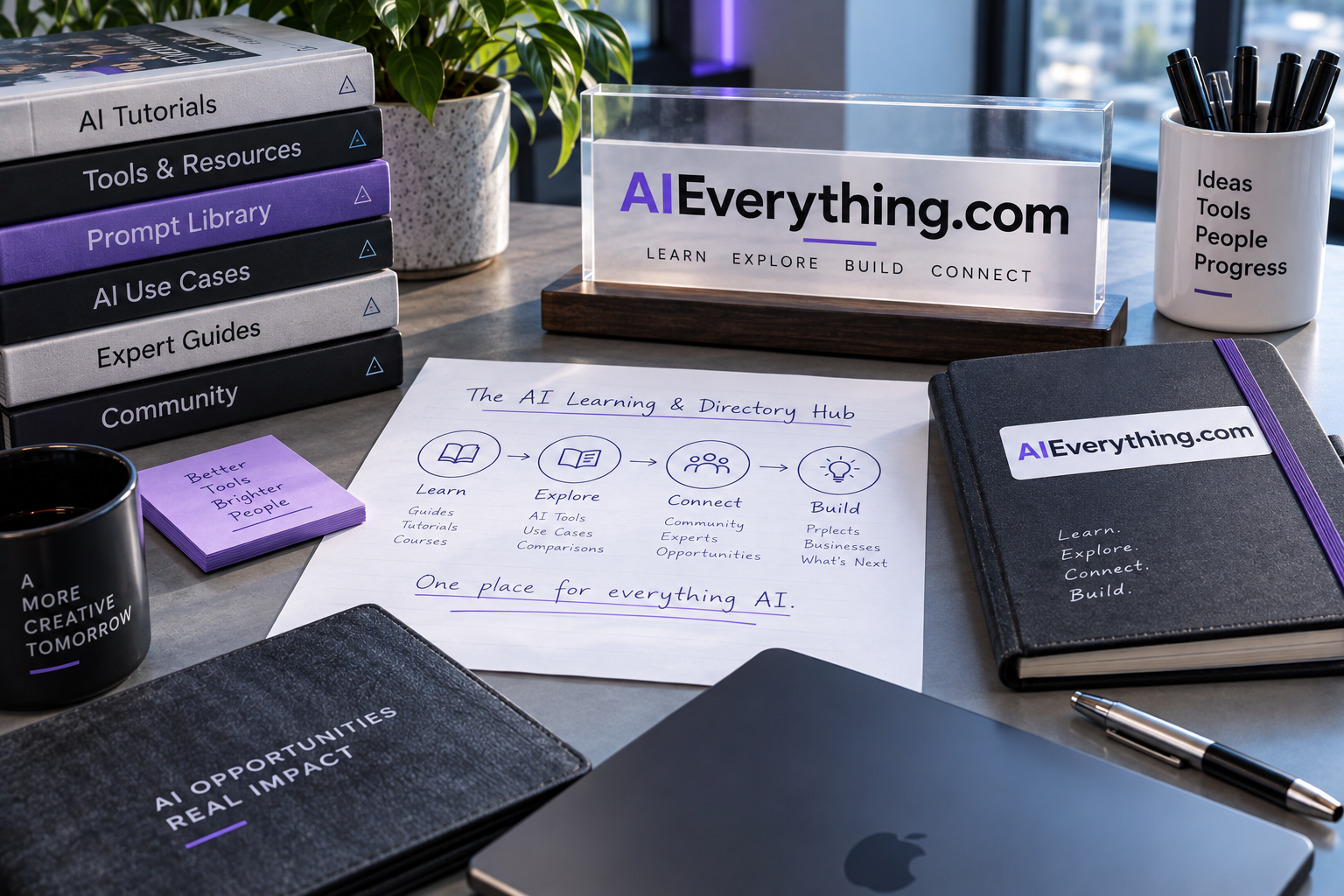
AIEverything.com could become a place to learn what AI tools are useful for and how to judge them. A learning and directory hub would make the most of the name’s breadth by organizing a wide subject around specific questions. Readers would come for a considered answer about what to learn, which approach to try and how to compare the results.
The concept below is illustrative. It assumes a new publisher with a small editorial team, not an existing audience or collection of courses included in the domain purchase. A sensible first reader would be a working professional who needs to complete a familiar task and wants a grounded introduction to the available approaches. That is a more useful starting point than writing for everyone interested in technology.
Organize around tasks, then tools
A directory often starts with product categories. This hub could begin with the work instead: summarize a meeting, inspect a spreadsheet, prepare a first draft or find information in an approved document set. Each task page would explain what a tool can contribute and where the reader still needs to check the result. Product listings would support the lesson.
For an illustrative first collection, choose research notes for small business teams. The collection might include a lesson on preparing sources, a demonstration of a summary workflow and a comparison checklist. It should show the same sample material across examples so readers can see differences without trying to compare unrelated demonstrations.
The initial offer could be a free sequence of practical lessons, followed by a deeper workshop once demand is understood. A paid course would need a specific outcome and a realistic prerequisite. “Prepare and review a source-based research note” describes something a learner can finish. A promise to master all of AI would be hard to teach and harder to assess.
Give each review a visible method
A useful review should say what was tested, when it was tested and which version or plan was used. Record the task, the input and the conditions that affected the result. If the reviewer could not test a feature, say so near the relevant claim. A reader should be able to distinguish a hands-on review from a description based on vendor documentation.
Choose criteria before deciding which tool looks best. For a research note, the criteria could include source traceability, handling of missing information, editing controls and export. These are proposed editorial criteria, not performance claims. The reviewer would need evidence for each judgment and should preserve enough detail to explain a correction later.
Reviews also need an update policy. A dated note can be more trustworthy than a page that silently changes its verdict. Decide which changes require a new test and which can be handled with an editor’s update. Archive old conclusions where they remain useful, but make the current state easy to find. A growing directory needs maintenance time as well as writing time.
Separate learning from commercial influence
The hub could eventually earn money through courses, memberships or clearly disclosed commercial arrangements. Those possibilities should be evaluated separately from the editorial ranking. A paid relationship must never quietly determine a recommendation. Readers need to know whether a link or placement involves compensation before relying on it.
The FTC’s disclosure guidance is a useful starting reference when planning compensated recommendations. The operational question for this concept is simple: where will a reader see the relationship, and who checks that the disclosure remains visible when content is reused? Specific legal obligations should be reviewed for the actual business and audience.
A public corrections route would also help. Invite readers to report a changed feature or a reproducible error, then explain how the editorial team reviews reports. Vendors can provide factual corrections without approving the verdict. That division protects the usefulness of the directory while allowing the publication to keep its entries accurate.
Build distribution through one recurring lesson
A plausible first distribution channel is a weekly task lesson sent to readers who explicitly subscribe. Each edition could include a small example, a common mistake and a link to the full exercise. It should deliver a useful result without requiring a purchase. The newsletter would make a consistent editorial promise even while the tool market changes.
Community participation could extend that lesson. A professional association might host a practical session using the same exercise, or a teacher might adapt it for a workshop. Provide reusable sample documents and clear permission terms for those materials. The objective is to make the teaching easy to share while keeping the source and limitations attached.
Search-oriented content would be organized around questions the team can answer well. A detailed page on checking a generated summary has a clearer purpose than a large batch of shallow “best tools” lists. No traffic assumptions are needed to make that editorial decision. The team can measure actual reader behavior after publishing and adjust the schedule accordingly.
Plan the work behind the pages
The operator would need subject knowledge, editing capacity, access to tools being reviewed and a way to preserve test notes. Accessibility matters for the lessons themselves: examples should work as text, and a video should not be the only way to follow an exercise. A small, maintained collection would be a credible launch.
AIEverything.com gives this concept room to add disciplines later. The first navigation could remain modest, with task guides, reviews and a learning path. The guide to precise AI copy offers a related way to keep headings and descriptions grounded. Broad coverage is an editorial ambition that can develop over time.
For an acquisition inquiry, describe the first audience and intended content model. A partnership proposal should add who will teach, who will maintain the directory and how readers will first encounter it. The name provides a public address for the work; the publication’s usefulness will come from the quality and care of its editorial decisions.